
Roofing
Roofing Company Website Design
After a storm, every homeowner on the street gets a knock on the door from a roofer they've never heard of. Most of them go online before they say yes to anyone. Your roofing company website is where you show you're the local crew who'll still be here in ten years.
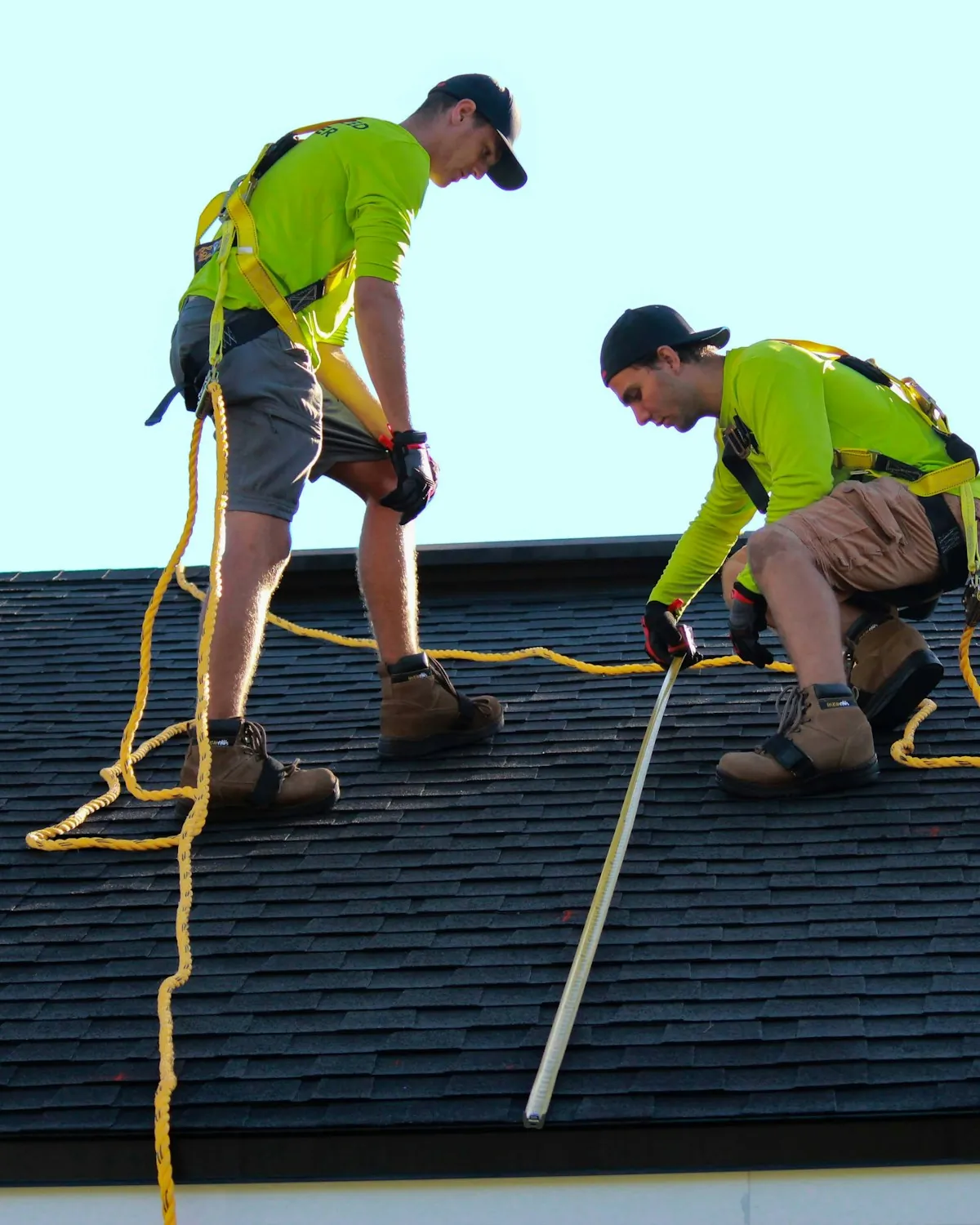
One photo, four things your site should show
The crew. Real names and faces, not stock photos.
Safety gear. Proof of insurance and how you work up high.
The measuring. Inspection photos that go out with the estimate.
The shingle. Brand, color and warranty, in plain words.
Problem 1: the storm chaser shadow
Every worry has an answer on your roofing website.
New Hampshire has no state license for roofers, and the Attorney General's office says home improvement scams are among the complaints it hears most. So homeowners check you out hard. Here's what they wonder, and the page on your roofing company website that answers it.
"Are you from around here, or did you follow the storm?"
Your site showsYour shop address, the year you started, and roofs you've done sorted by town, with photos.
"Are you licensed?"
Your site showsIn Massachusetts, your Construction Supervisor License for roof covering and your Home Improvement Contractor number. In New Hampshire, proof of insurance and the towns you pull permits in.
"Will they push me to sign today?"
Your site showsHow your estimates work, step by step: a free look, a written price with photos, and time to think it over.
"Who talks to my insurance company?"
Your site showsWhat you give them for a claim, like photos, measurements and a written estimate, and what stays between them and their insurer.
"What happens if it leaks next spring?"
Your site showsYour workmanship warranty in years, the shingle maker's warranty, and who to call.
"Have they done a roof like mine?"
Your site showsGalleries by roof type: asphalt, metal, flat rubber, and repairs on old slate.
Sources: New Hampshire Department of Justice consumer alert, March 2022; Massachusetts Office of Public Safety and Inspections, Construction Supervisor License types, read November 2026.
A site with all of these pages: Website & Analytics ($50 a month).
Problem 2: the week after a storm
The phone rings all day while you're up on a roof.
Wind and hail cause more homeowners insurance claims than anything else. After a bad storm, everyone calls at once, and the roofer who answers first gets the inspection.
$14,747
was the average wind and hail claim paid on U.S. homeowners policies. That's a big job for you, and a big worry for them.
Source: Insurance Information Institute, from ISO (Verisk) data, 2019 to 2023.
A storm page, ready to go live
Written ahead of time, posted the morning after. What to do now: take photos from the ground, stay off the ladder, call your insurer, and book a free look.
A request form with photos
They add the address and a few phone photos of missing shingles or a dented gutter. You sort the urgent leaks from the "can wait a week" calls before you drive.
Calls answered while you work
AI call answering takes the address, what they see, and whether water is coming in. Active leaks get flagged to you by text right away.
A note to past customers nearby
One text to the people whose roofs you've done in the storm's path: "Want us to take a look?" Good for them, and good for you.
Storm page and form: Basic CRM + Website ($150 a month), which also lets you text past customers by hand. AI call answering: Complete Platform ($300 a month), with call time at about 3¢ to 4¢ a minute. AI usage can vary.
Problem 3: estimates that go quiet
A new roof is a big check. People take their time.
Many homeowners get more than one price. Then life gets busy. The roofer who stays in touch, politely, is often the one who gets the job.
Estimates with photos and a deposit link, plus follow-ups that send themselves: Complete Platform ($300 a month). They stop the moment the customer replies or signs.
- Day 0
The estimate, with the roof in it
Photos of every slope, the soft spots and the flashing you'd replace, all in the same link as the price. Now they can see what you saw.
- Day 3
A short check-in
A text from you, not a sales script.
Any questions on the estimate? Happy to walk the roof with you.
- Day 10
Something useful
A link to your shingle color page, with photos of real houses in each color. Picking a color moves people closer to a yes.
- Day 30
The calendar nudge
Let them know how far out you're booking. It's true, and it's the most honest kind of urgency.
- Yes
Signed and on the schedule
They approve online and pay the deposit by card. The job moves to "scheduled" and the follow-ups stop.
Problem 4: a New England roofing year
Busy in summer, quiet when the snow flies.
You can't change the weather. You can change what your site and your emails talk about each season, so the slow months fill next year's calendar.
Winter repairs and booking
Ice dams and leaks are the calls. An ice dam page explains what's happening and when to call. In late winter, an email to last year's "not yet" estimates offers spring dates.
Shingles put on in the cold may not seal until warm weather, and makers like GAF say they may need hand sealing. Telling owners that up front builds trust.
Source: GAF technical bulletin TAB-R-133, read November 2026.
Spring the list fills
Winter damage shows up as the snow melts. Your inspection form and gallery do the selling. Online booking for free inspections saves the back-and-forth.
Summer storm season
Thunderstorms and wind bring the rush. The storm page goes live, call answering covers the overflow, and estimate follow-ups keep last month's quotes warm.
Fall last call
Before the snow is a real deadline. An email to your list: gutters, flashing and small repairs now, before ice sets in.
Seasonal emails you send yourself: Basic CRM + Website ($150 a month). Emails that go out on a date you set, every year: Complete Platform ($300 a month).
FAQ
Roofer questions.
What roofing owners ask us most on the first call.
Book a call. Giles will look at how many quotes went quiet and what a follow-up plan could look like for your crew.
Book a free callShould a roofing site list prices?
Roofs vary too much for one number. Explain what moves the price instead: how many layers come off, how steep it is, rotten decking, and the shingle line. Then offer the free inspection. Owners trust a roofer who explains the math.
Can homeowners send roof photos from the ground?
Yes, and the form tells them to stay off the ladder. Ground photos of missing shingles, a sagging gutter or a ceiling stain help you decide what's urgent. You still climb up before you give a final price.
Won't a storm page make me look like a storm chaser?
Not if it's calm and useful. Skip the scare words and the "act now." Give steps they can take today, your local address, and a way to book a look. That reads like a neighbor, not a van from out of state.
Can I track jobs waiting on an insurance adjuster?
Yes. Each job sits in a stage, like "inspected," "waiting on adjuster" or "approved." You can see at a glance who is stuck, and on the Complete Platform a reminder pings you if a job sits too long.
Can you build an instant roof quote tool?
That's a Custom Build. It runs up to $2,500 a month, and we quote a setup fee first, before any work starts. Most roofers start with the photo form and a fast written estimate, and see if they need more.
Do I have to sign a contract?
No. You pay month to month. Some roofers keep the full platform from spring to fall and drop to the $50 website plan for the winter.
Stay in touch until they sign.
Build your estimate follow-up during a free 5-day trial.